

The following case was prepared by Delmy Alvarenga while working as Creative Strategist at 4am Saatchi & Saatchi. People First™ is property of 4am Saatchi & Saatchi and a registered trademark protected under law. For inquiries, contact Guillemo Martinez.
People First™
Humans by nature, solutions by design
What if we stopped doing advertising and treated people for what they are? What if we ditched away the “mass-produced” consumer and started recognizing human’s real needs to craft thoughtful, impactful solutions?
Crafting a strategy
The advertising industry is in flux.
In Guatemala, competition and substitutes are rising rapidly, commoditizing the creative and production landscape.
Big companies work with global networks while mid-to-small businesses don’t have large budgets to invest in strategic development, creative and media.
4am Saatchi & Saatchi is a privately held company in Guatemala, operates under Saatchi & Saatchi proven agency model. However, the 41-year-old company has suffered a lot of transformations during the years. These changes responded to the fluctiating market needs and strategies fluxed from media buying (2000)
to creative performance (2011) to digital business disruption (2013).
Although these strategies are successful, none of them prove long-term sustainability.
Now the agency faces brutal disruption because of emerging internet technologies, performance-based fees and ever growing skeptical firms that see advertising as an expense and treat agencies a “another” switchable service provider not prepared for the 21st century challenges of digital marketing, e-commerce, Big Data and Artificial Intelligence.
Competitive Landscape
The creative industry has faced many transformations along history.
Media transformations and technological developments disrupt the industry every once in a while. However since the dot.com boom, the advertising industry has taken turns in faster ways than ever before. Creative humans are not enough. Machine intelligence and interconnectedness are redefining and reshaping the face of what the creative industry looks like.
Although we don’t find any scholar document that exhibits the creative industry evolution in Guatemala, it is visibile that local agencies are aligning to big agencies and network processes and workstyles.
For example, Publicis has changed from a muti-agency offer, to a connecting needs company as stated in their “Power of One” focus, where they don’t see themselves as a service company but as a solutions company, integrating their multiple agencies and subdivisions into clients and consumer needs.
Shackleton added current technological trends to their value proposition, integrating big data through Shackleton Datalytics, using data to generate value for their clients.
DDB, another key player in Guatemala, has also made big adjustments to their worksylte, blurring the lines between business units by integrating digital along their creative offer.
Exhibit 1. Competitive Landscape
| Focal Firm | Performance Metrics | Capabilities | Objectives & Values | Identified Strategy |
|---|---|---|---|---|
| DDB | Agency of the Year Effies Awards 2017. | Research, Strategic, Creative, and digital development. | Create products, services and experiences across all touchpoints. | World-class work made in Guatemala. |
| BBDO | Agency of the Year Effies Awards 2015. | Strategic, Creative develpment. | UNKNOWN | The work, the work, the work. |
| Ogilvy | Most effective agency Effies Awards 2016. | Research, Strategic, Creative, and digital development. | UNKNOWN | UNKNOWN |
How to prove groving value in these volatile times?
Strategic Approach
In a world of accelerated change, a strategy cannot be formulated by top management alone. So, in order to accelerate and involve key players, I conducted the strategic development along 4 main areas:
Strategic roadmap
Stakeholder analysis
Change is not easily welcomed and most people don’t understand why change is needed.
Before developing any strategy, I established the level of resistance and cynicism the company would face towards strategy implementation.
Is the ground fertile for the change? Who are the primary stakeholders that will help us or block our way? How many roadblocks will we find and how will we overcome them?
To answer these and many other questions, I conducted an online survey where agency stakeholders could select their level of identification with the statements presented.
I conducted in-depth interviews with Business Unit Directors and High Performance Personnel to identify major pains, gains, and jobs to be done. I also revisited exit interviews and talked with former employees to understand what made them leave.
strategy formulation
The creative industry main capital is human.
I had to understand not only the Central American culture and background but to contextualize my findings in a human framework. What do our people really care about? What do our clients need? What generates value for both of them?
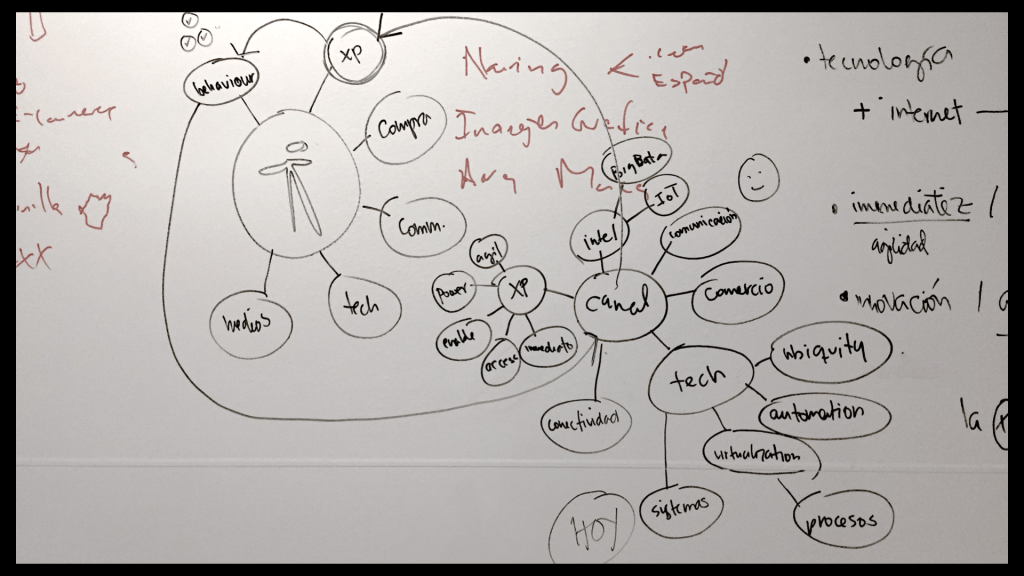
After the Human Experience Assessment, I conducted weekly Design Thinking sessions first with the CEO and then integrating A-team players and outside advisors. The main goals for this sessions were:
- To avoid tunnel vision.
- To open space for candid conversation.
- To empower people to develop and own the solutions.
Among the solutions people found was the need for integration. Teams recognized they were working in silos, processes were unclear and there was duplication of labour.
Teams found that there were misunderstandings about common industry terms and confussion about the kind of services and the quality level it was expected from clients. Using storytelling and visual representations
in the War Room helped everybody understand what the main goal was and the direction the company is heading.
strategic analysis
Along with the CEO, we presented the strategic framework to the managing level directors to assess feasibility from Operations and Financial point of view.
On a Director’s level, I prepared a Business Development Deck, including research results, methodologies, and frameworks, analysis and conclusions, roadmaps and workflow diagrams among others, both for Operations reference and documentation.
strategic implementation
To organize the strategy execution, I developed a framework integrating 4 key pillars for implementation considering:
- Responsibility: Work profiles and Capabilities Units redesign.
- Learning: Learning and Intellectual Development Program.
- Recognition: Talent Recognition System.
- Joy: Day-to-Day Leadership and day-to-day operations.
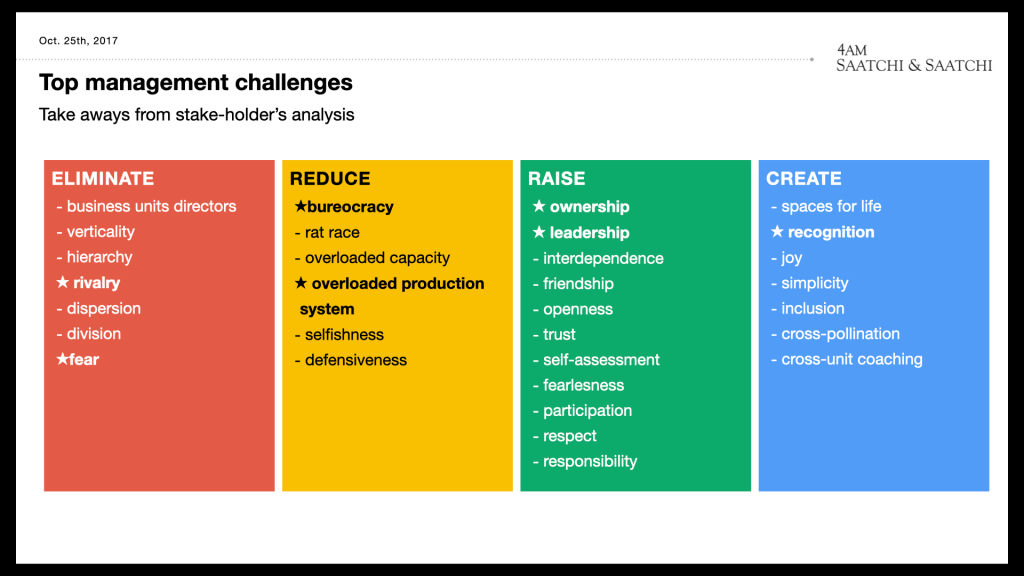
Stakeholder’s Analysis
Key take-aways from stakeholders analysis
Strategy Formulation
War-room where strategy sessions were conducted with stakeholders.
Bringing the strategy alive!
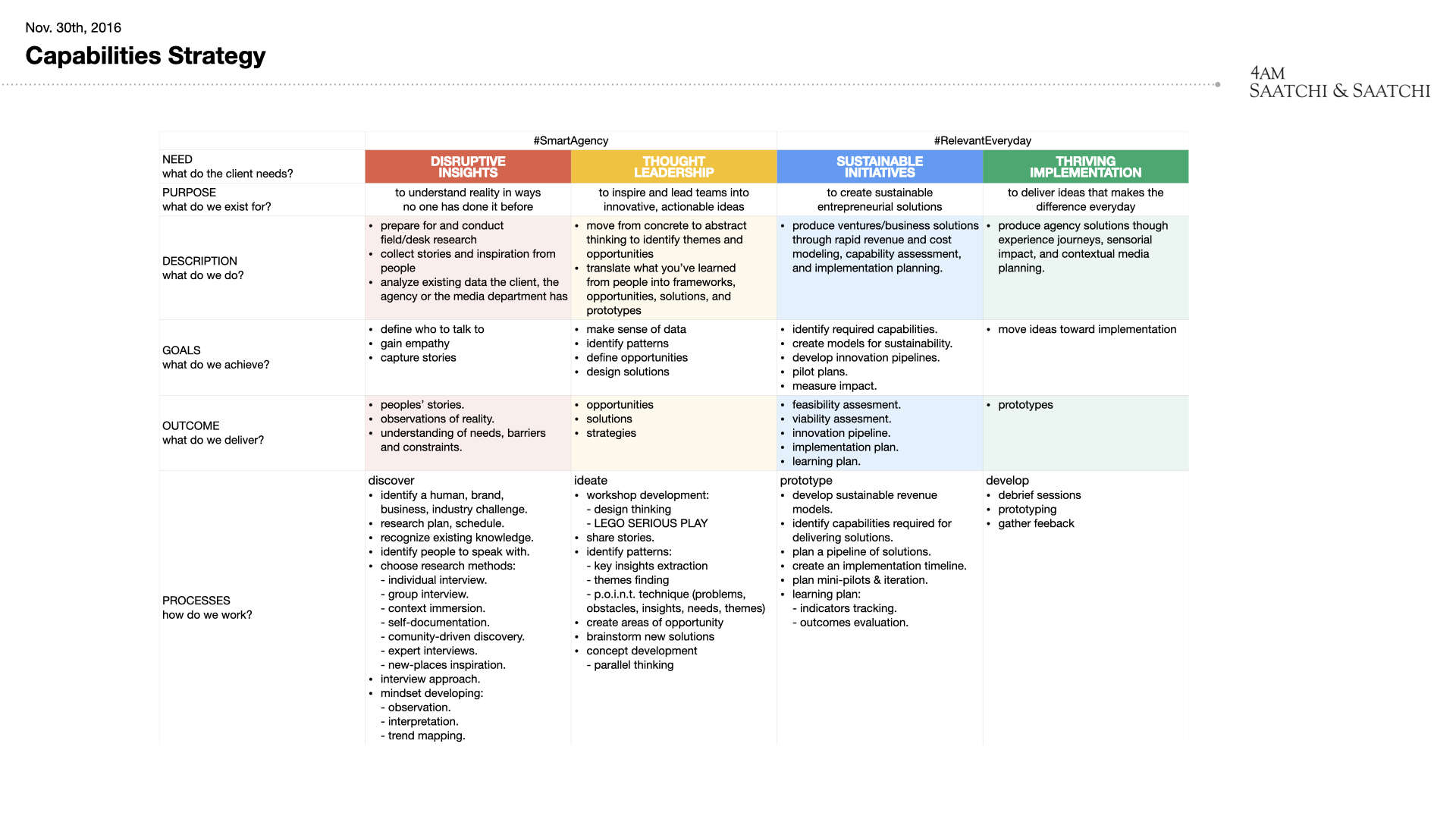
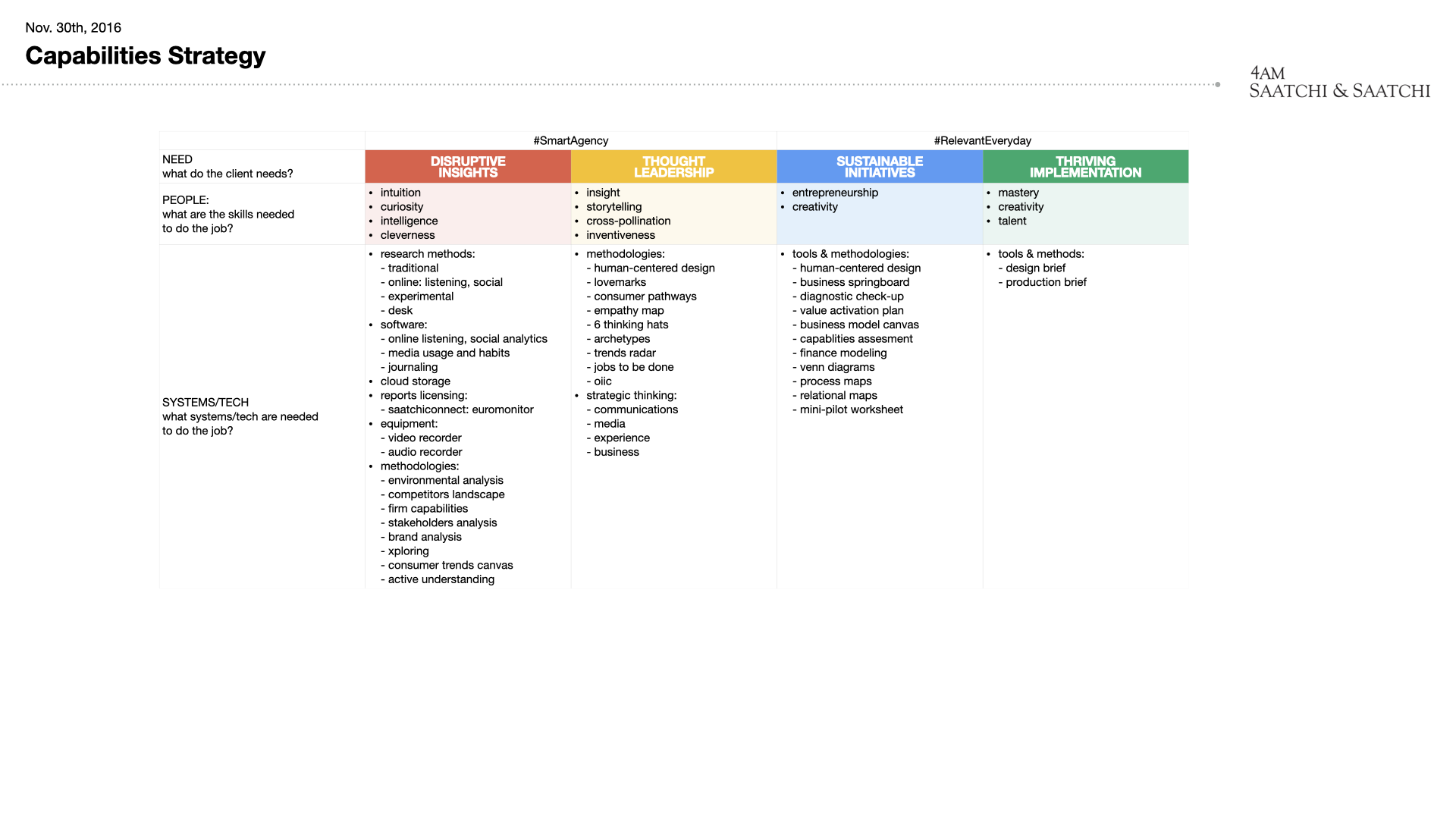
Capabilities Strategy
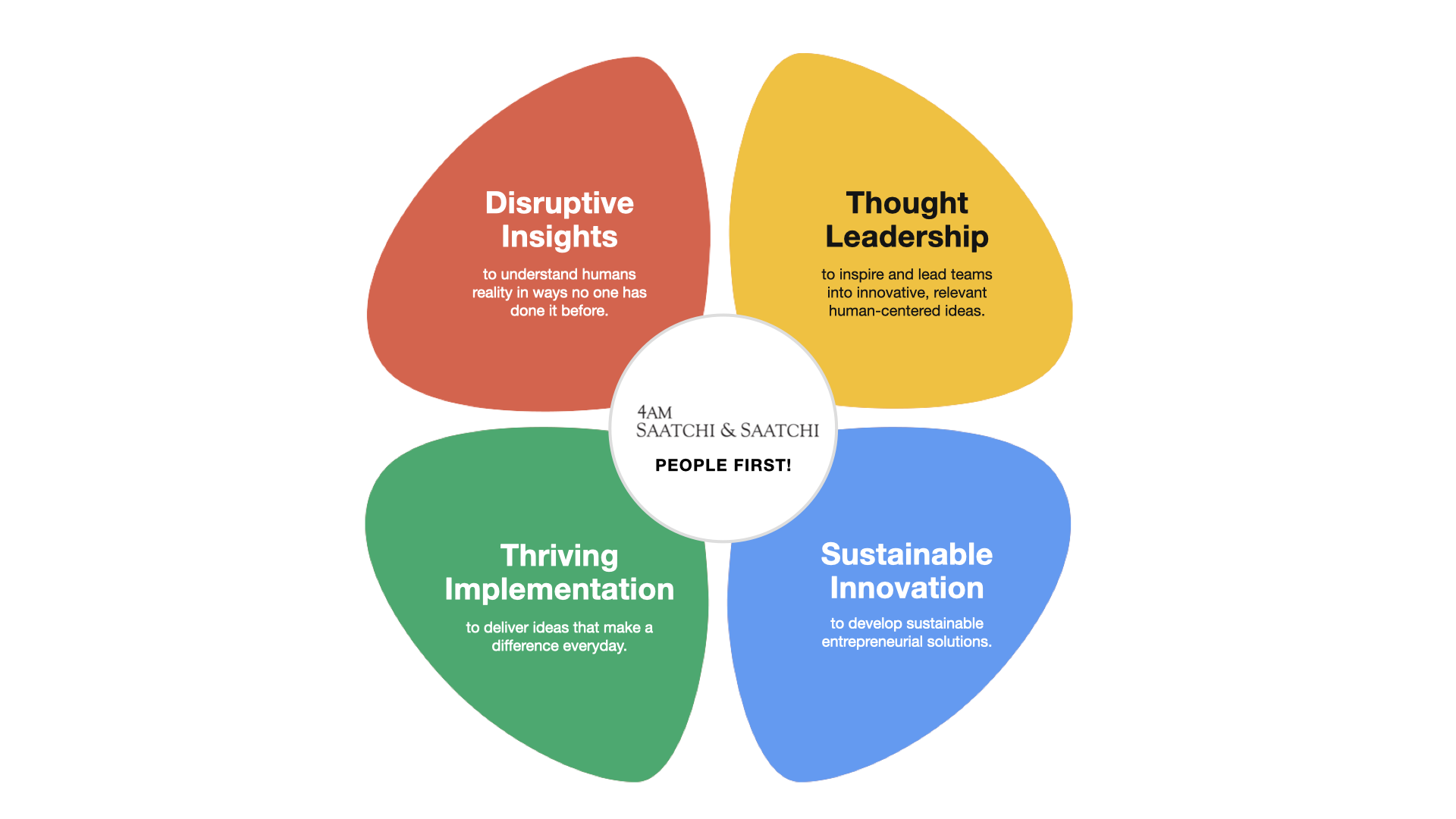
The Business Strategy was then translated to a Capabilities Framework establishing four main capabilities to develop business growth.
I also created, revised and re-designed the business models for each capability, defining lean business processes, qualified talent and technology required to deliver our value proposition.
By 2018, strategy implementation is led by our regional CEO, local COO and CFO and all Leadership team including General Creative Director, Insights & Strategy Director, Experience Director and Media & Technology Director.


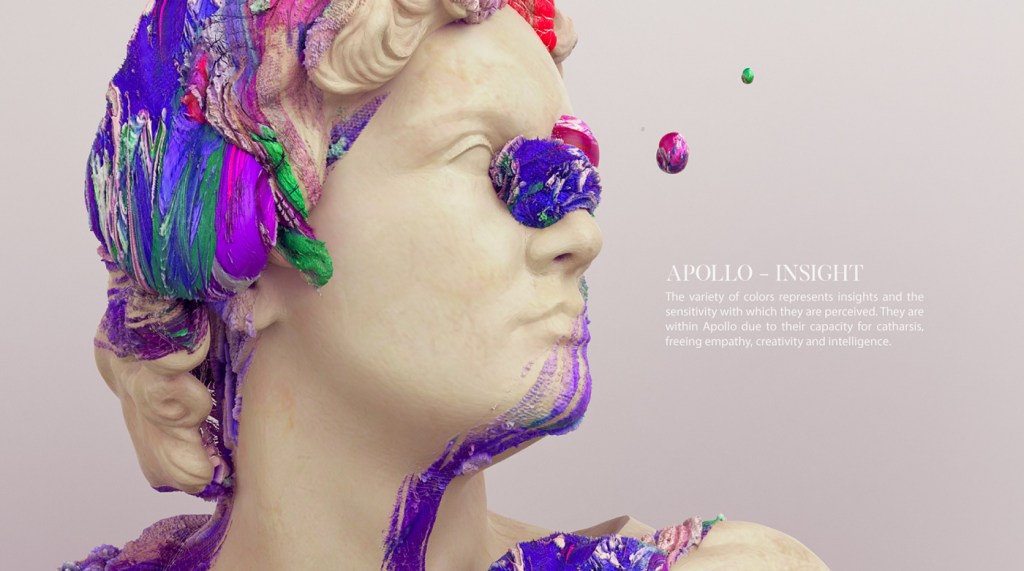
Disruptive Insights
To build an Insights Unit whose the main focus is to gather data and analytics for strategy development.
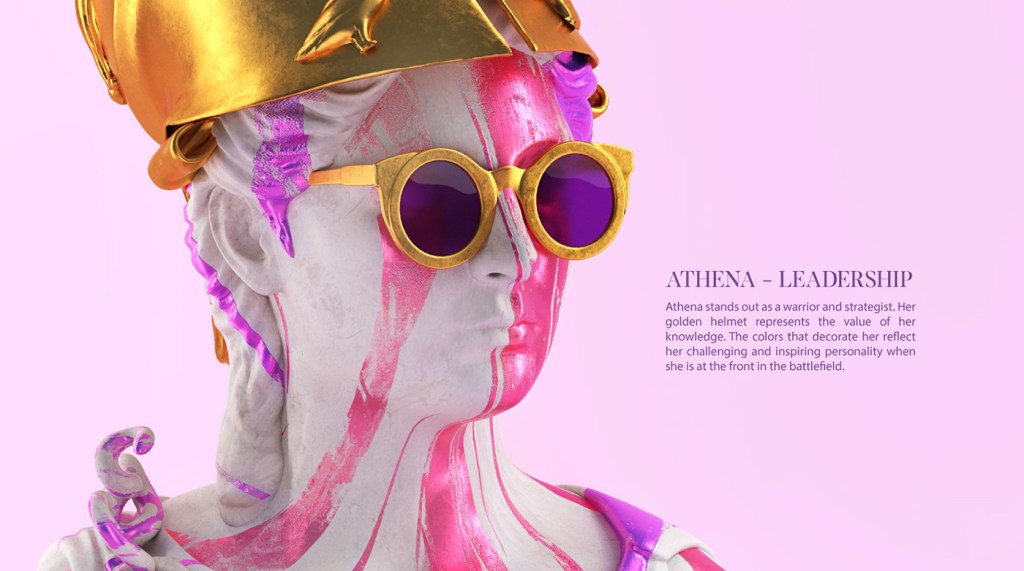
Thought Leadership
To professionalize the unit and leverage the creative team into strategic thinking.

Thriving Implementation
To integrate digital knowledge into the production workflow to consolidate teams and facilitate economies of scale.

Sustainable Innovation
To leverage clients data to offer innovative products and services beyond advertising and media buying. Become a consultant agency.
People First from the inside out
Culture Strategy
To create up a structure based on culture, I mapped out a diagram integrating 4 strategic pillars for implementation were developed, considering
- Responsibility: People assessments and Business Units re-definition.
- Learning: Academy program to enable knowledge.
- Recognition: Human Resources and Rewards System Design.
- Joy: Team management and work process leadership.
Integrated framework of initiatives
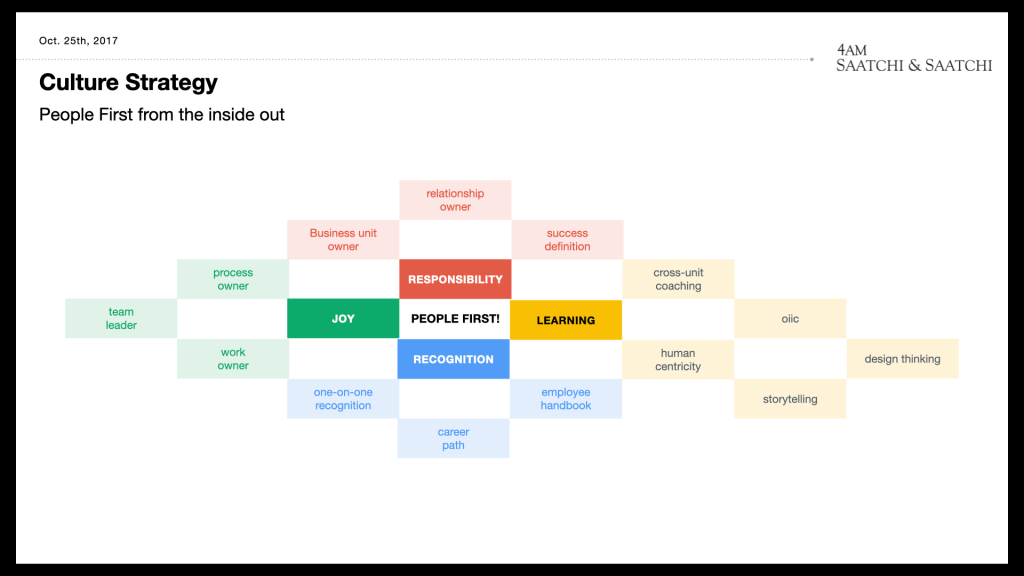

Responsibility & Joy
Key tactics
- Director’s Problem Solving: monthly meetings to strategy revision, problem identification and tactical formulation.
- Talent Pools: revision of all job descriptions, talent assessments to discover Strategy Champions, A-layers and Key Contributors.
- Cloud Workflow: re-evaluation of physical space, technology and internal systems, from accounting to cloud servers in order to lean up all processes.

Learning
Key Tactics
- 4am Academy: leverage knowledge by empowering people to share knowledge in a peer-to-peer academy.
- Internal HR campaign: ignite all agency through internal campaings to leverage morale and teamwork alonn all internal stakeholders.

Recognition
Key Tactics
- Reward System: HR inclusion to develop an integrated system, including career paths and reward systems.
- Talent 2.0: Job descriptions to align skills aligned to the long-term mission of the company.
Crafting a brand with meaning
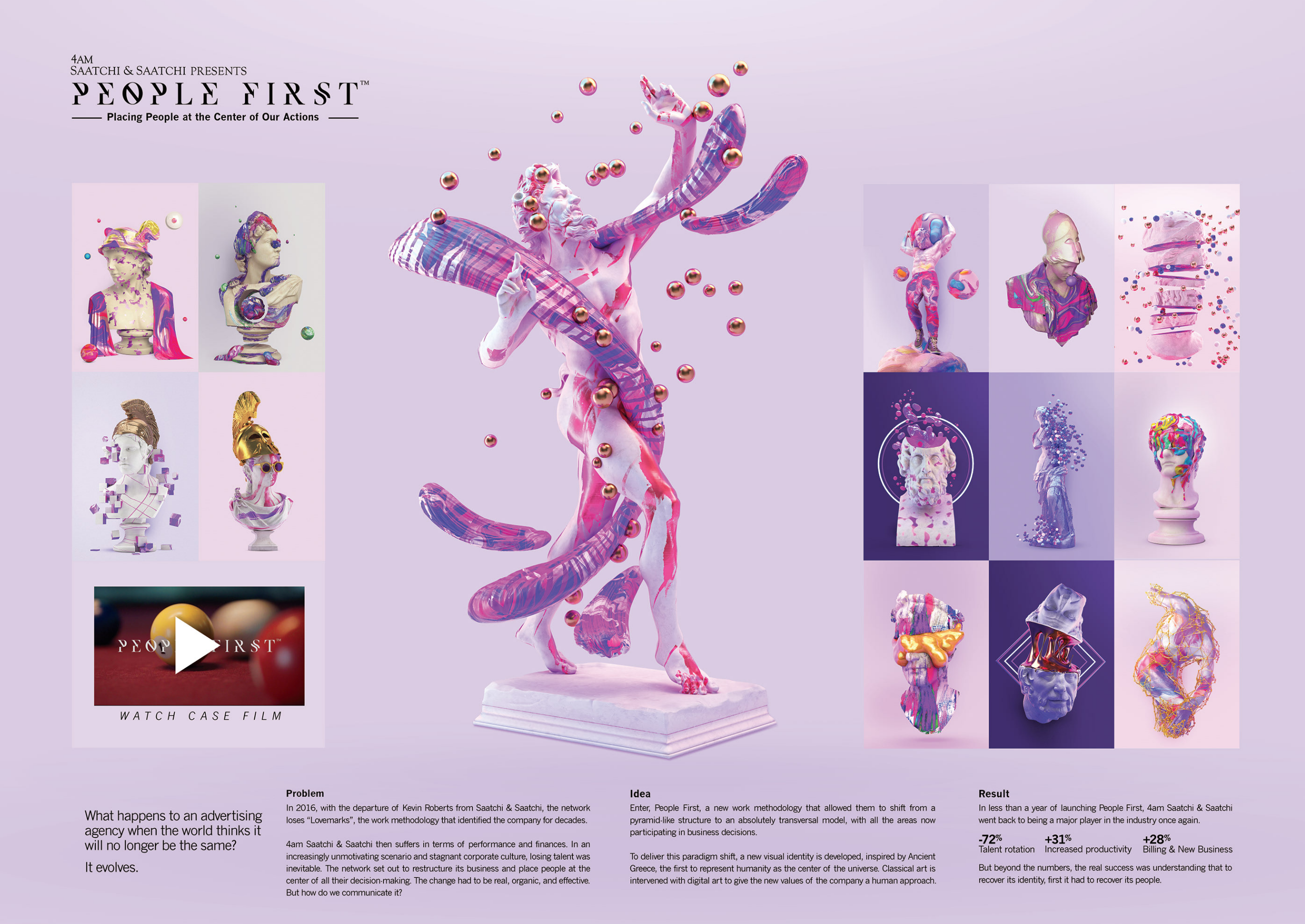
Technology, innovations and ideas are of no use if they do not solve a real problem. Therefore, we return to the origin. We put people first to develop strategies and campaigns that connect them with their real needs.

Briefing the teams
Value proposition
After all the business strategy development, we needed to brand our value proposition and make it accesible for our clients. After all, we are transforming the way we work, from the inside to the outside.
Creative request
Request to the agencies
We designed a creative brief so all 4am agencies across Central America could participate and pitch in their vision for the brand.


People First ™ is propety of 4am Saatchi & Saatchi. All rights reserved under law.



 Delmy Alvarenga
Debe estar conectado para enviar un comentario.